Same-day service On-site repair Call 072 686 0472
On-site repairs for ovens that won't heat, uneven cooking, dead stove plates, faulty switches, and gas hobs that click but won't light. Built-in and freestanding.
Quick answer: The most common causes are a failed heating element (bake, grill or fan element), a faulty thermostat, a failed selector switch or timer, or a failed fan motor in fan ovens. If only the grill or only the fan setting has stopped working, that one element is usually the fault.
Before you call, check that the oven isn't locked on a timer or clock setting. Many built-in ovens won't heat until the clock is set, especially after a power outage. Also check the breaker or isolator switch.
Power surges after outages can damage electronic timers, clocks and control boards on modern built-in ovens. We can test the oven and give you a written surge report for your insurer.
This table shows the most likely Oven or stove faults, so you know what to expect before we arrive:
| Symptom | Most likely causes | What to check first |
|---|---|---|
| Oven not heating at all | Element; thermostat; selector switch; timer or clock not set; thermal cut-out | Set the clock and check the breaker |
| Cooks unevenly or too slowly | Fan element or fan motor; thermostat out of calibration; door seal | Check whether the fan is turning |
| Grill not working, oven fine | Grill element; selector switch | Look for a visible break or blister on the grill element |
| Stove plate not heating | Plate element; plate switch (simmerstat); wiring | Test whether other plates work |
| Plate stuck on high | Faulty plate switch (simmerstat) | Turn off at the isolator and don't use it until repaired |
| Gas hob clicks but won't light | Wet or dirty burner; faulty igniter or spark module | Dry the burner caps and make sure they're seated properly |
| Gas flame goes out when you let go | Faulty thermocouple (flame safety device) | Stop using that burner and book a repair |
| Trips the power when switched on | Shorted element or damaged wiring | Don't reset repeatedly. Book a technician. |
Quick answer: If you smell gas, turn off the gas at the cylinder or supply valve, open windows, don't switch on lights or appliances, and leave the area. Don't use the hob until it has been checked.
A burner that won't stay lit when you let go of the knob has a faulty flame safety device (thermocouple). This is a safety part and should be replaced, not bypassed.
Quick answer: Every job starts with a flat R350 call-out fee. That includes getting to you, finding the oven or stove fault on site and a written quote. After that, the oven or stove repair price depends on the part and labour, and nothing happens until you approve it.
Plate switches, grill elements and oven elements are the most common repairs and are usually affordable. Fan motors and igniters cost a bit more. Electronic control boards on premium built-in ovens are the most expensive. For typical price ranges, see our appliance repair cost guide.
Ovens and stoves are usually worth repairing, because most faults are with elements and switches that are simple to replace. Built-in ovens from brands like Bosch, Siemens, Smeg and Miele are almost always worth repairing rather than replacing, especially because replacement units must fit the existing cabinet.
We take Oven or stove bookings Monday to Saturday, 07:30 to 17:30. Most oven or stove call-outs are seen the same day, depending on how busy our technicians are. Living in an estate? Send the gate procedure with your oven or stove booking and we'll sort out access.
Oven or stove repairs in all of these areas carry the same R350 call-out. Linked areas have their own local page.
We repair all major brands of built-in and freestanding ovens, stoves and hobs:
Defy · Bosch · Smeg · Siemens · AEG · Miele · Whirlpool · Samsung · LG
Every oven and stove repair starts with a flat R350 call-out fee. It includes the trip to you, testing the oven or stove on site and a written quote. The final cost depends on the part needed, and you approve the quote before any work begins.
Many built-in ovens need the clock to be set before they'll heat after a power cut. Set the time, and if it still doesn't work, the timer or control board may have been damaged by a surge.
Usually the fan element or fan motor has failed, so hot air isn't circulating. A faulty thermostat or worn door seal can also cause it.
The igniter keeps sparking if it's wet, if a burner cap is out of place, or if the spark switch or module is faulty. Dry the burner parts and reseat the caps. If it keeps clicking, the switch or module needs replacing.
Yes. We repair built-in and freestanding ovens, including Bosch, Siemens, Smeg, Miele, AEG and Defy.
We cover Sandton, Bryanston, Fourways, Midrand, Kyalami, Waterfall, Pretoria East, Centurion, Randburg, Northcliff, Bedfordview, Edenvale and the surrounding suburbs, for the same R350 call-out fee.
Send your suburb, the oven or stove brand and what it's doing, and we'll offer the earliest slot.
📞 Call 072 686 0472 💬 WhatsApp UsOther services: Fridge Repair Gauteng · Washing Machine & Dryer Repair Gauteng · Aircon Repair Gauteng · Aircon Installation Gauteng
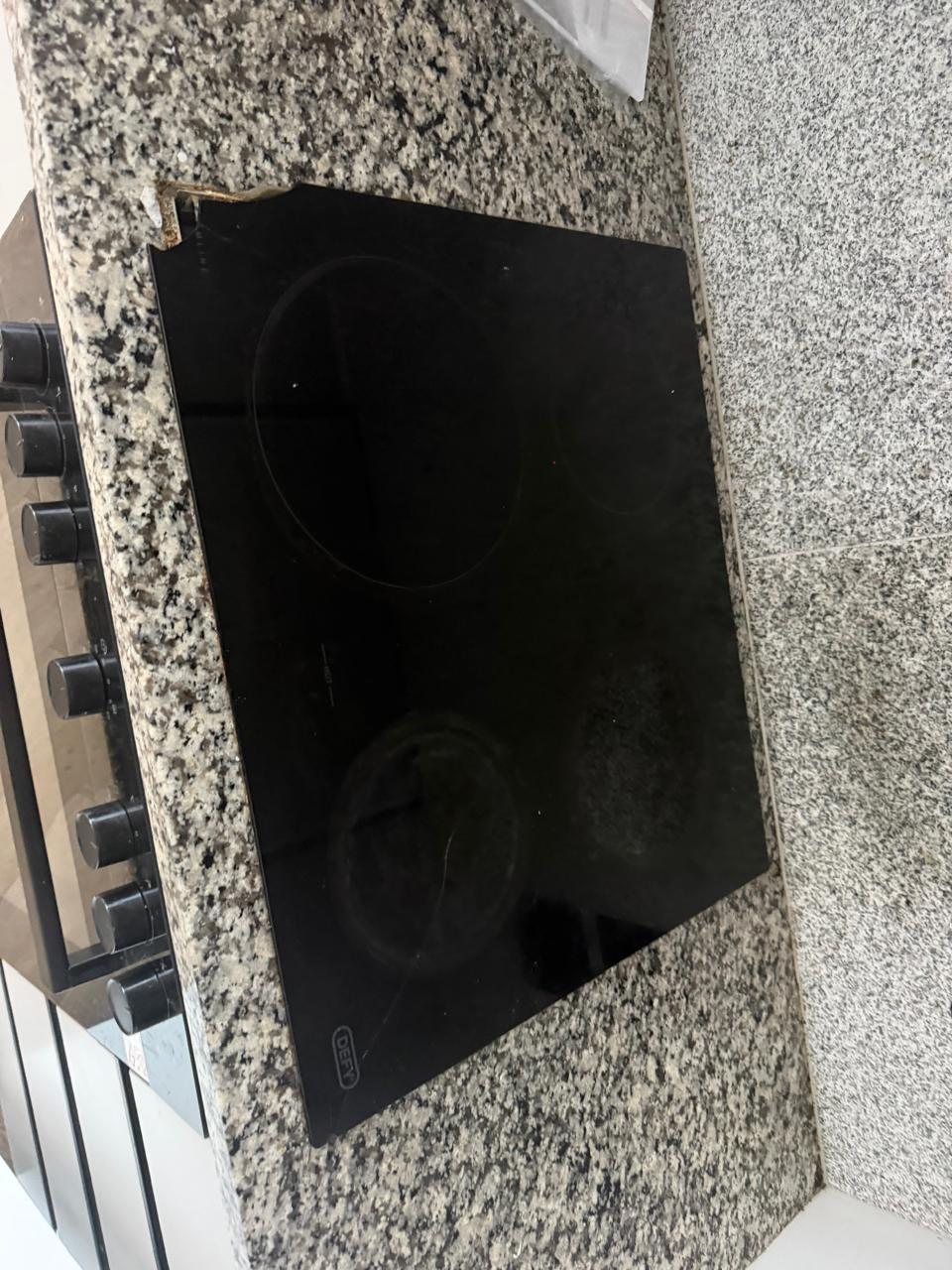
The customer in Fourways had a Defy ceramic hob with cracked glass and asked us to replace just the glass top. We talked it through honestly: a replacement glass top for this hob costs about three-quarters of the price of a complete new hob, and it would have taken 5 to 10 working days to arrive, leaving the kitchen without a stove top in the meantime. A complete new hob made more sense, so we supplied and installed one, and had it working within 2 hours of the first call. We fitted it into the existing cut-out, connected it and tested the plates heating up properly. Tip: never use a ceramic hob once the glass is cracked. Spills can reach the elements and wiring underneath, which is a shock and short-circuit risk. Switch it off at the isolator and get it replaced.
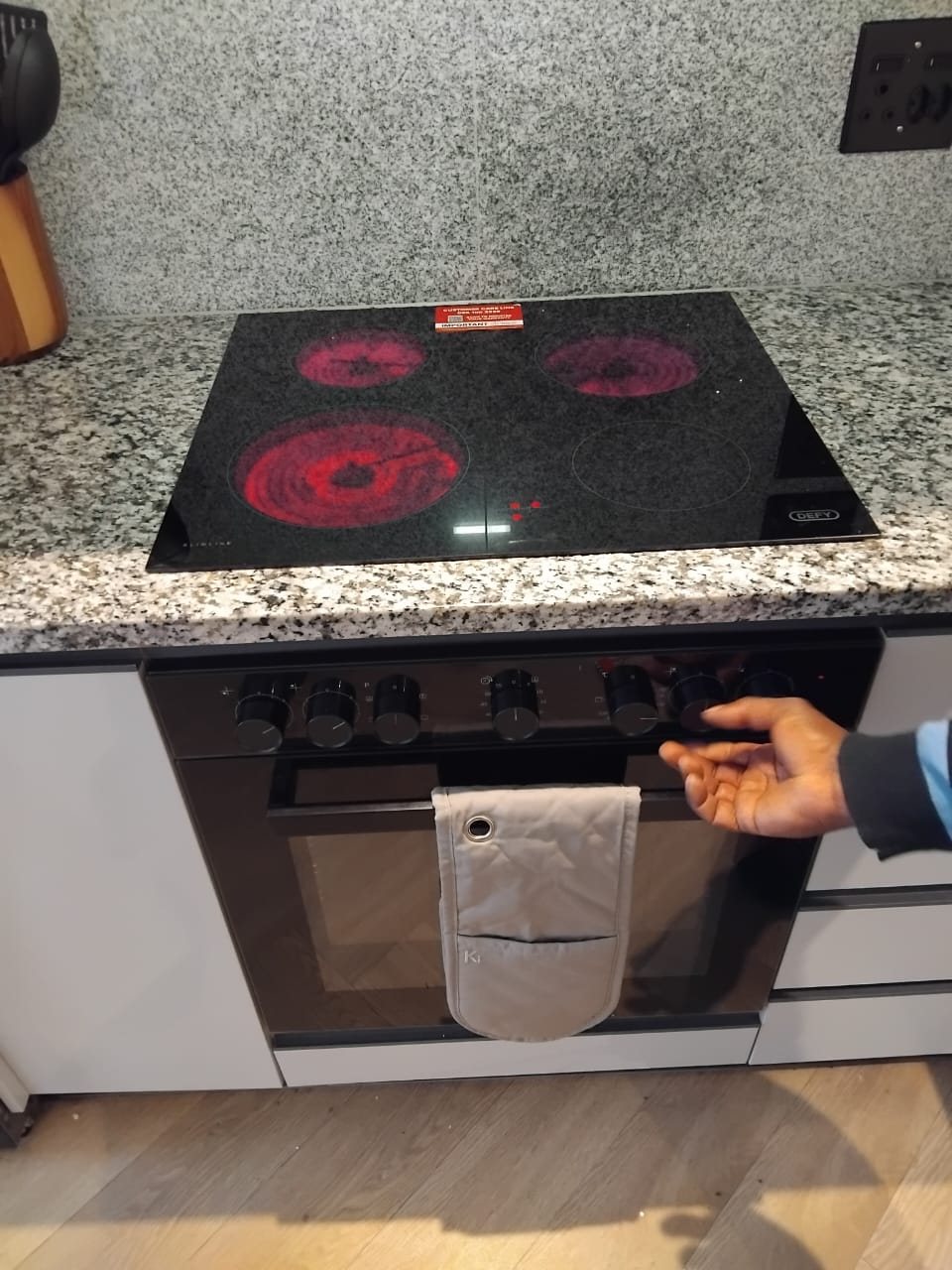
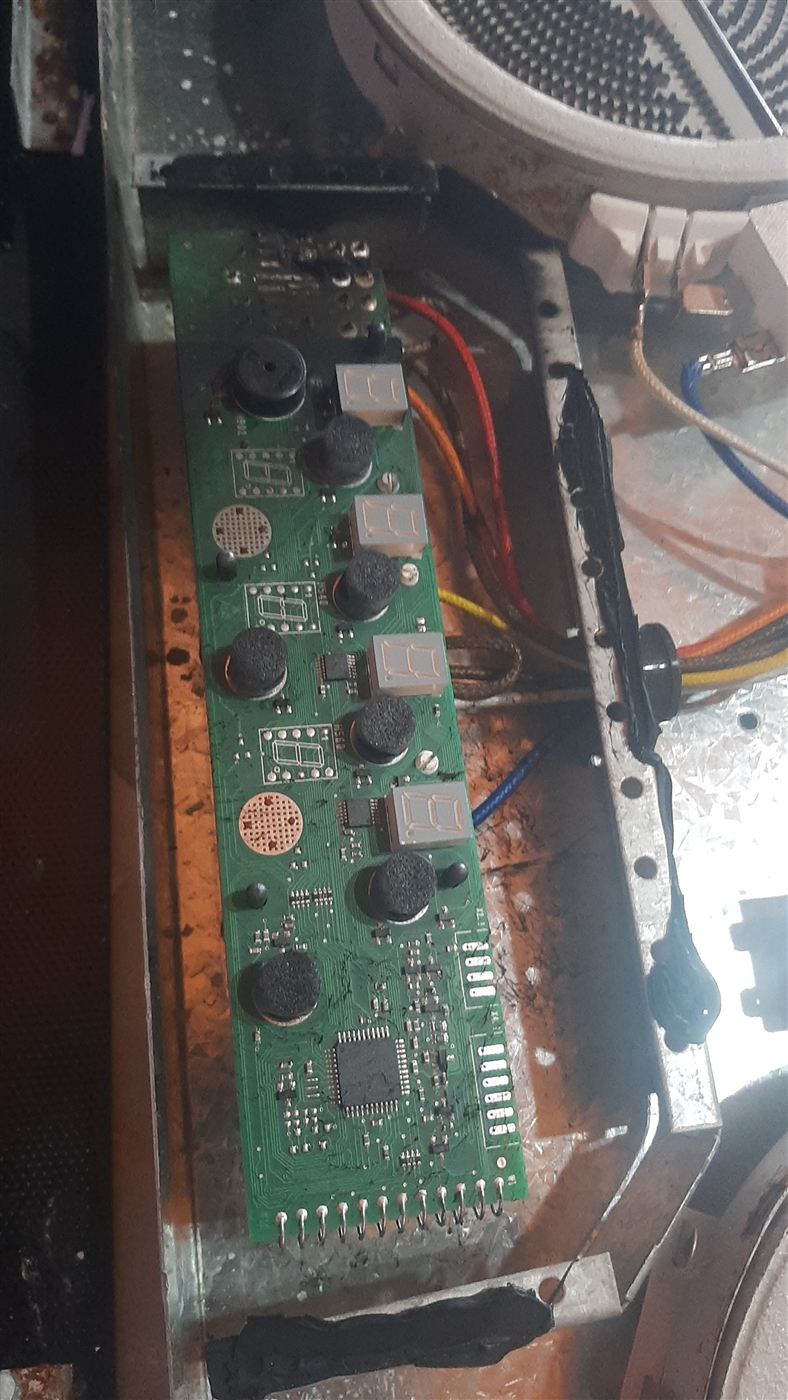
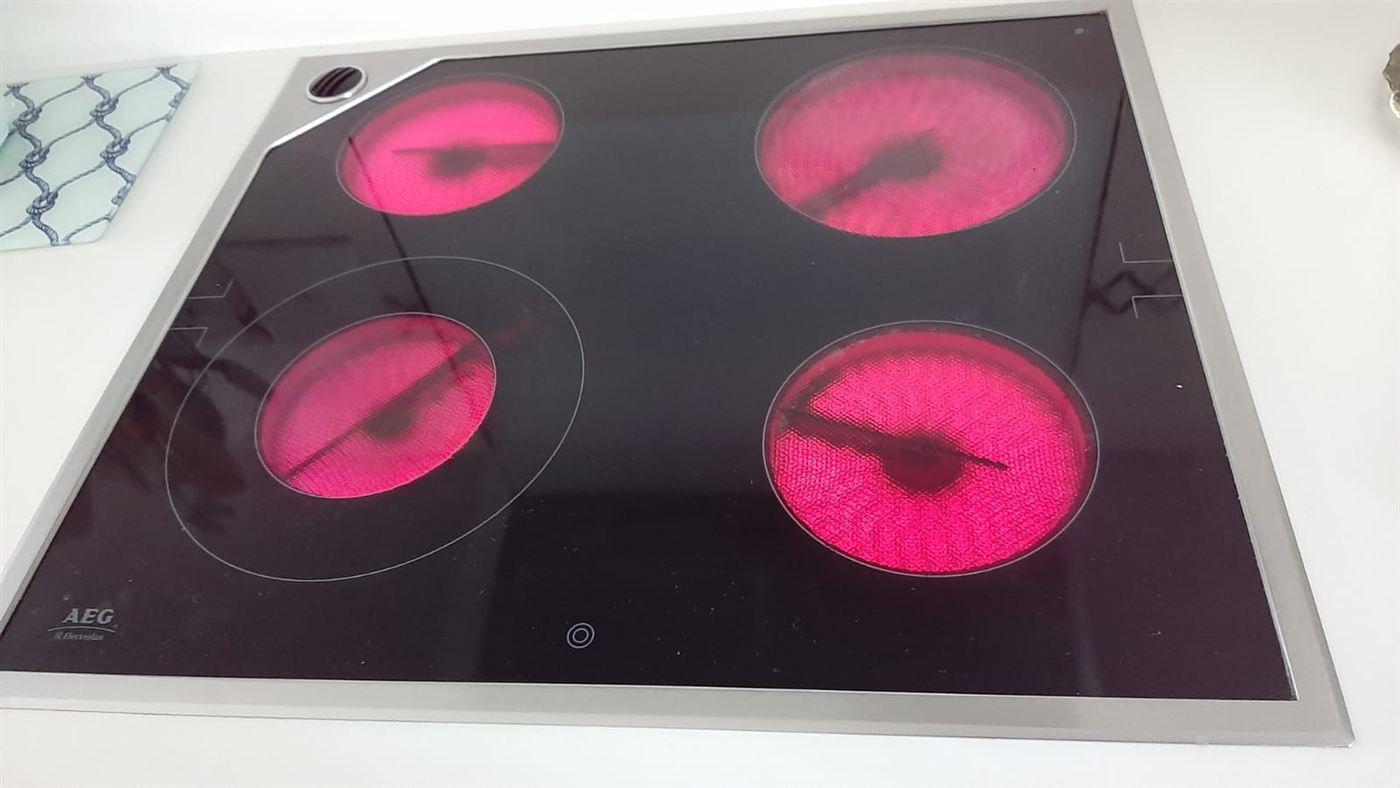
This AEG ceramic hob in Kyalami was switching plates on by itself, which is unsettling and a real safety risk. A touch-control hob is run by a control board under the glass that reads the touch sensors and switches the plates. When we lifted the hob and took the board out, the cause was clear: cockroaches had been living in the warm space under the hob, and their droppings and residue had damaged the board. That kind of contamination can create stray connections that the electronics read as a touch, so plates turn on without anyone pressing anything. We replaced the control board, refitted the hob, and tested every plate: all four heat up properly and only come on when you touch the controls. Tip: the warm, dark space under a hob or inside an appliance attracts cockroaches. If you see them in the kitchen, treat the area, because they can short out control boards in hobs, ovens, microwaves and fridges.
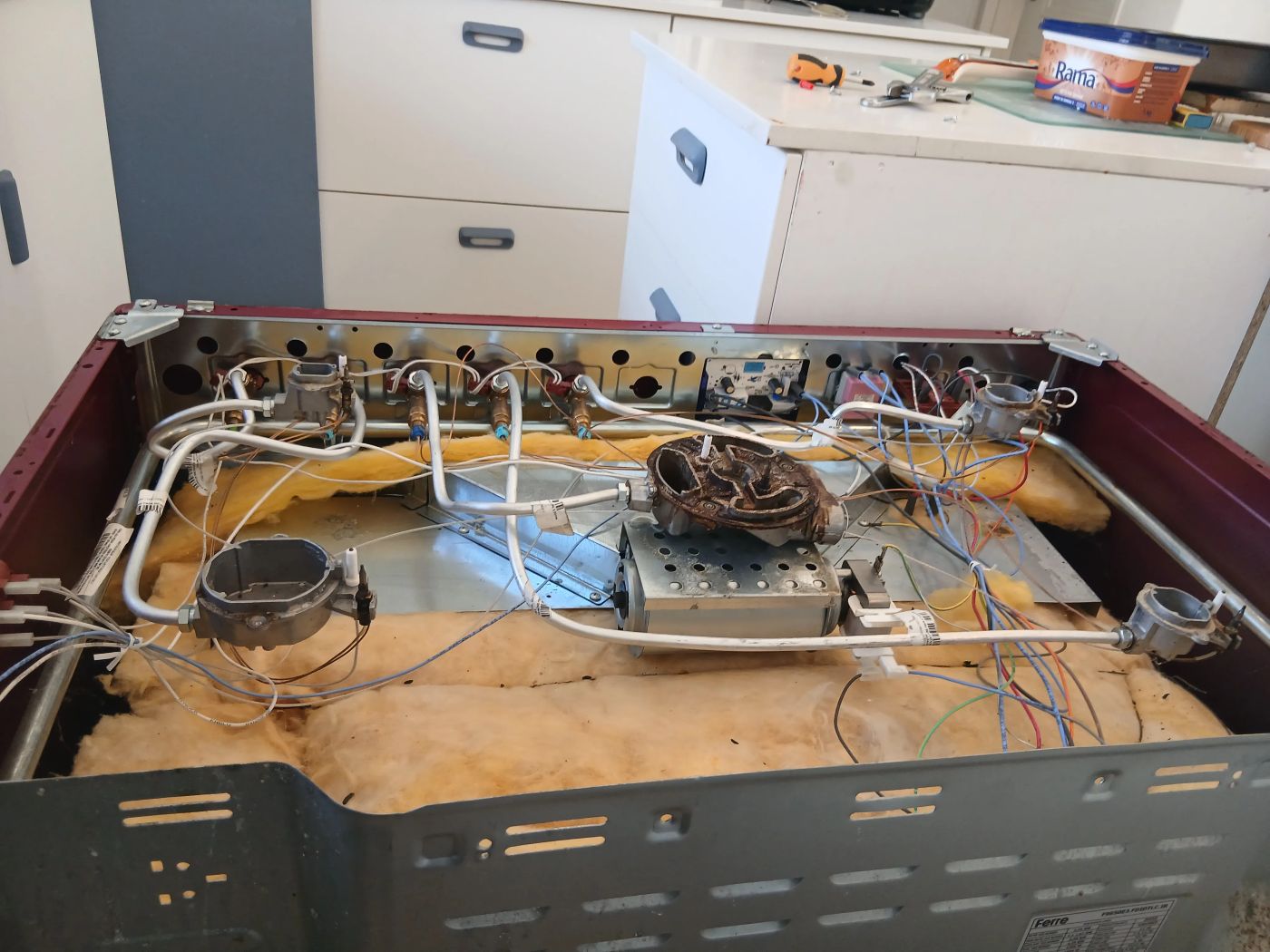
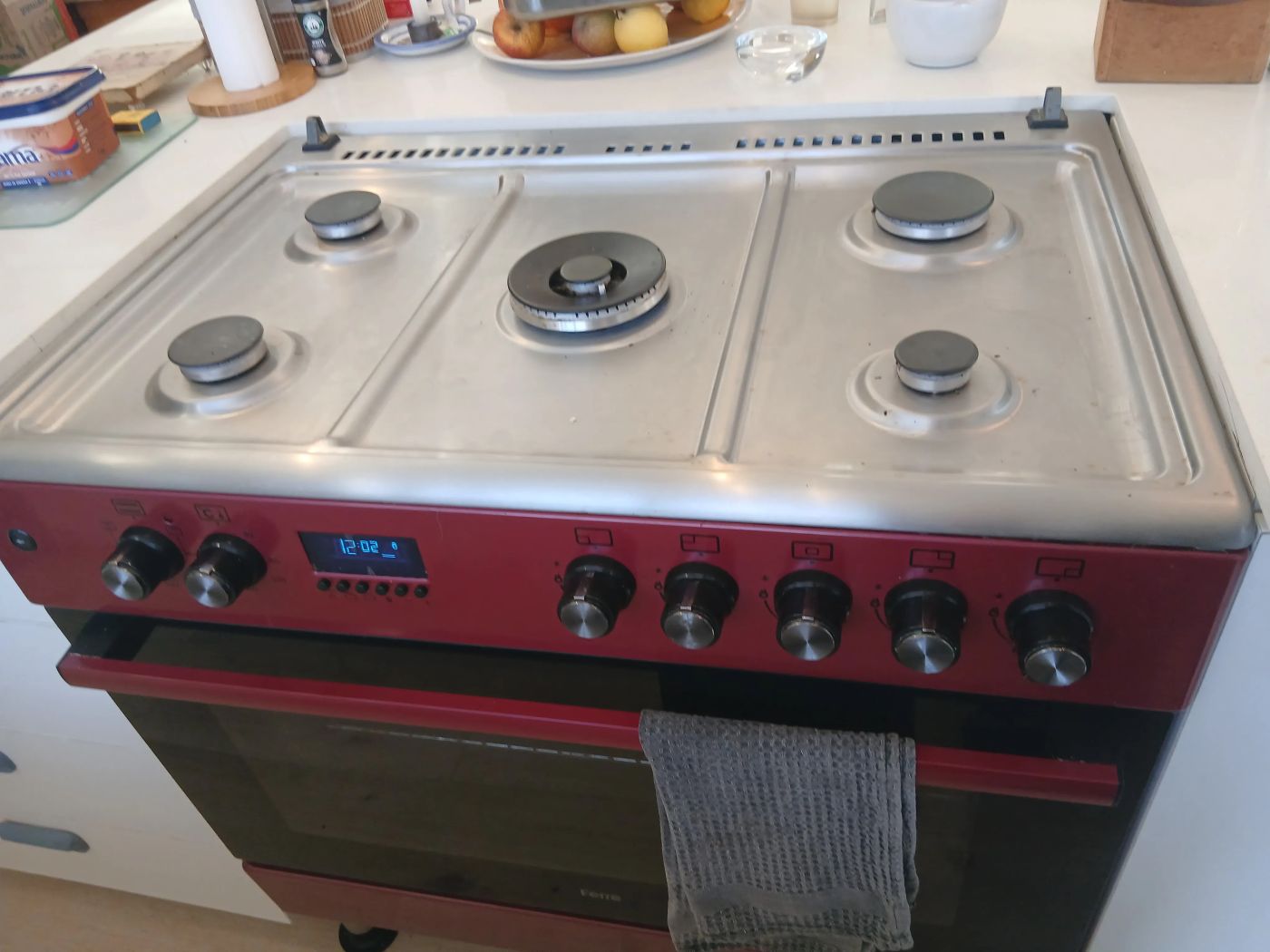
This Ferre five-burner gas cooker in Sandton was giving the customer an electric shock every time they tried to light the burners. That's dangerous, and it's not something to live with. The spark ignition on a gas hob uses a high-voltage spark to light each burner. When part of the ignition system is damaged, for example a cracked igniter or worn insulation on its lead, the spark can find a path through the cook instead of jumping to the burner. We lifted the hob and tested the ignition system, found the damaged igniter, and replaced it. We then tested every burner: they all lit cleanly with no more shocks. Tip: if your stove gives you a shock, even a small tingle, stop using the ignition and have it checked. Wet hobs, cracked electrodes, worn igniter leads and a faulty earth can all cause it.
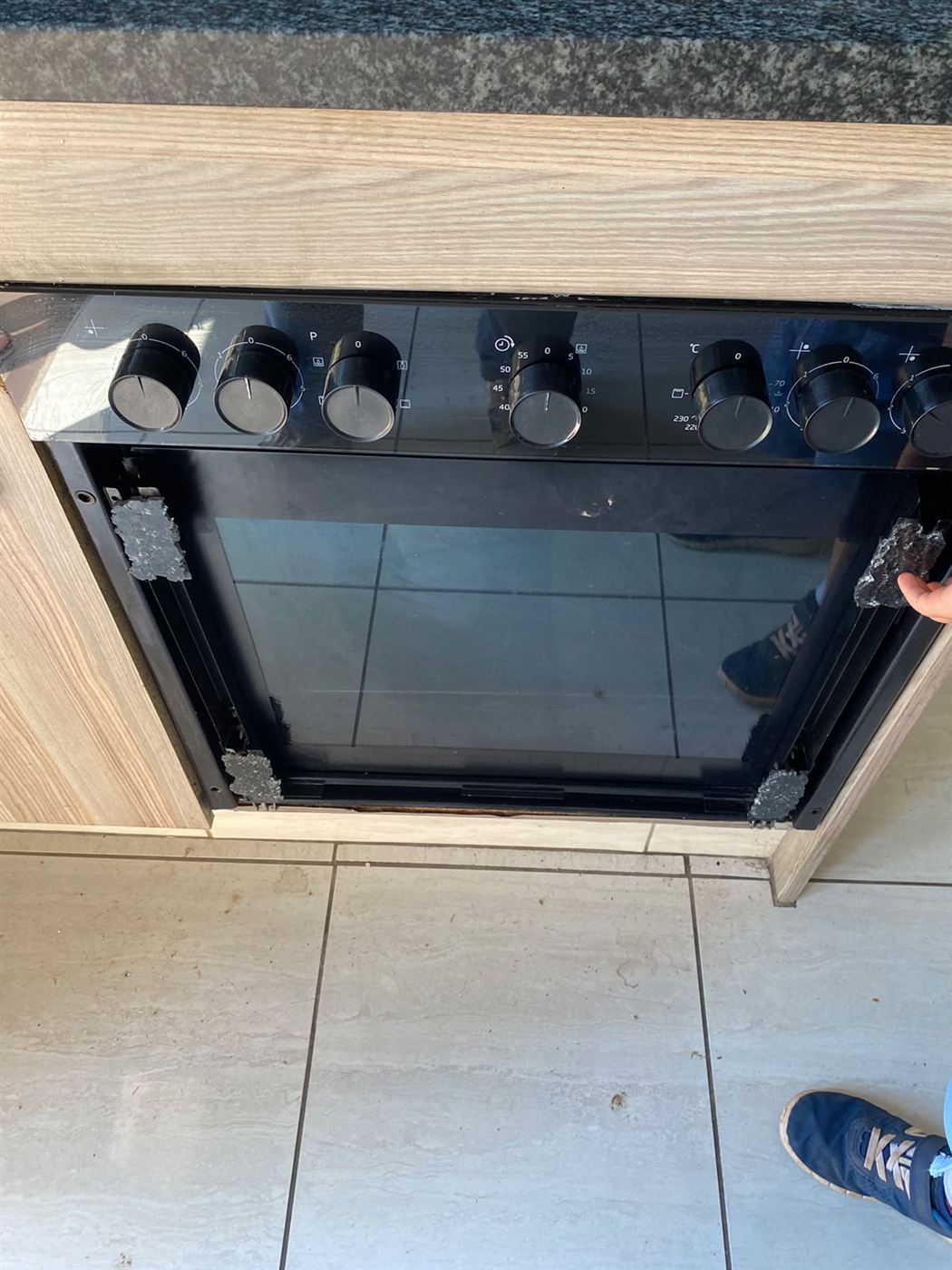
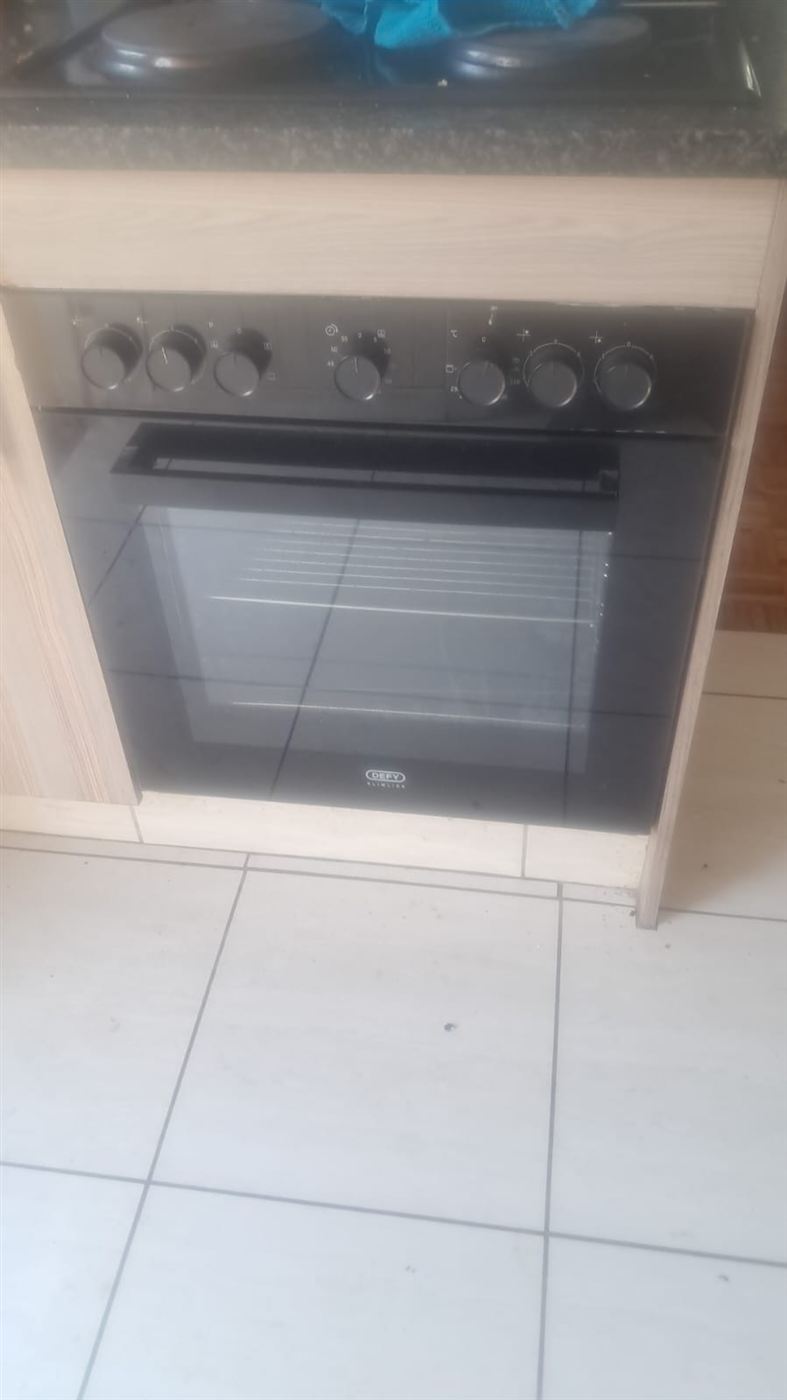
The outer glass on this Defy Slimline built-in oven door in Inanda had shattered. Only a few broken pieces were left stuck in the corners of the frame, leaving the inner glass exposed. Tempered oven glass can break suddenly from a knock, a heavy pot or a sudden temperature change, like cold water splashed on a hot door, and it breaks into small pieces rather than large shards. We removed the remaining broken glass safely, cleaned the door frame, and fitted the correct replacement glass for the model. We then checked the door closed and sealed properly. The oven looks like new again and is safe to use. Tip: if any pane of your oven door is cracked or chipped, stop using the oven until it's replaced. Damaged tempered glass can shatter completely once it heats up.
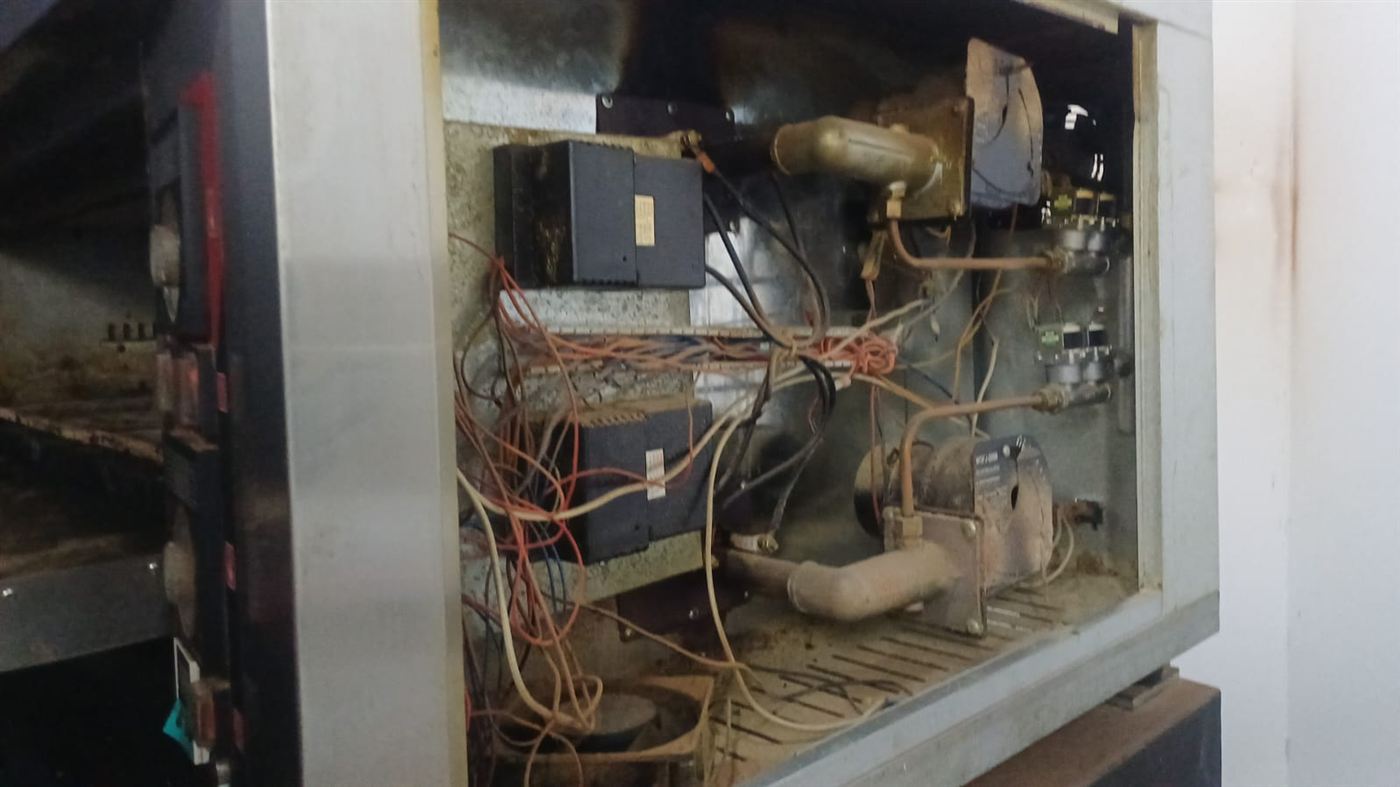
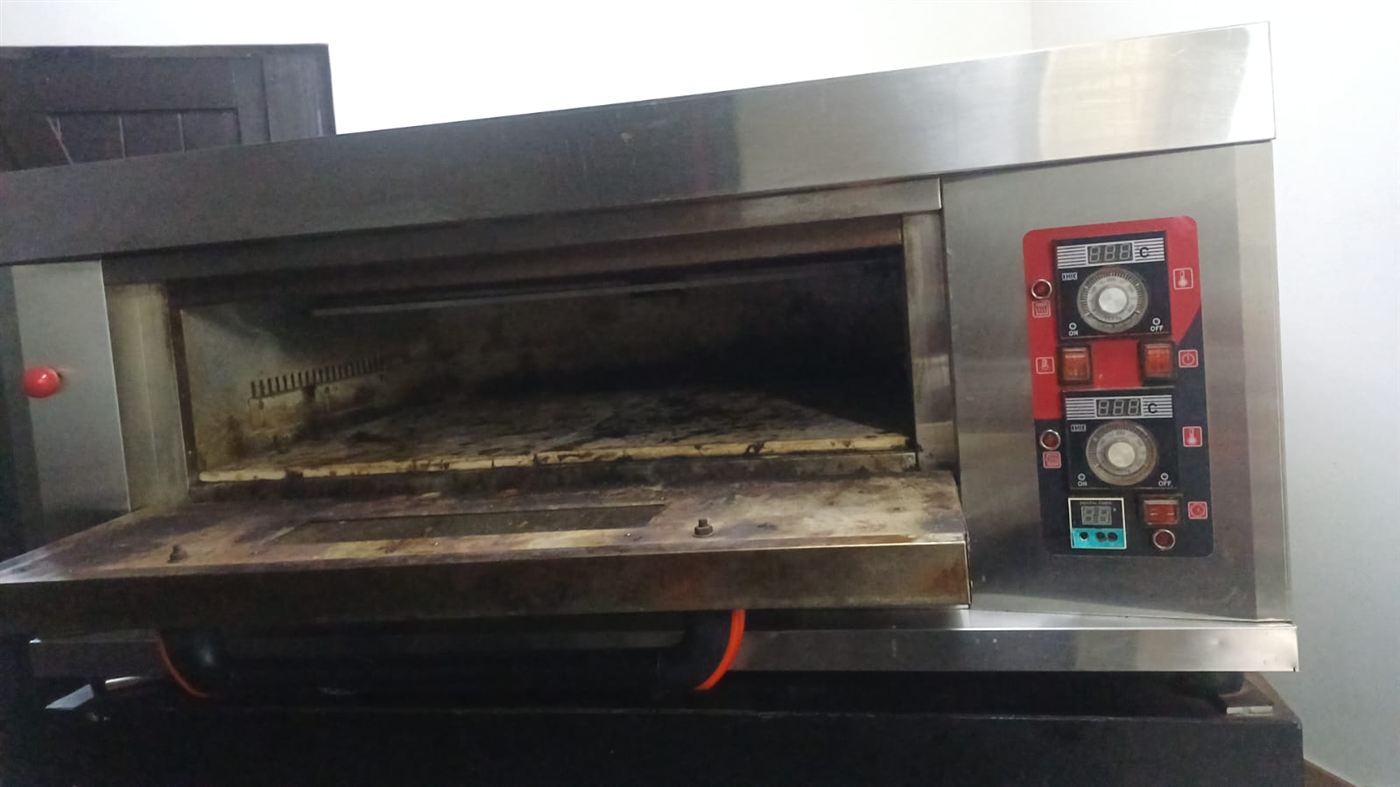
This gas deck oven at a Randfontein food business wouldn't light, and in a commercial kitchen an oven that won't fire means lost trade. Deck ovens like this one use a burner system with an automatic ignition: when the thermostat calls for heat, a control module sparks the igniter, opens the gas valve and checks for a flame. If the spark, the flame sensing or the module fails, the burner never lights or shuts down straight away. We opened the side panel, tested the burner's ignition system and fixed the fault, then fired the oven and checked both the top and bottom heat came up to temperature. Tip for food businesses: flour, grease and dust build up around deck oven burners and ignition parts. Having the burner compartment cleaned and checked regularly cuts down on ignition failures in the middle of a busy shift.
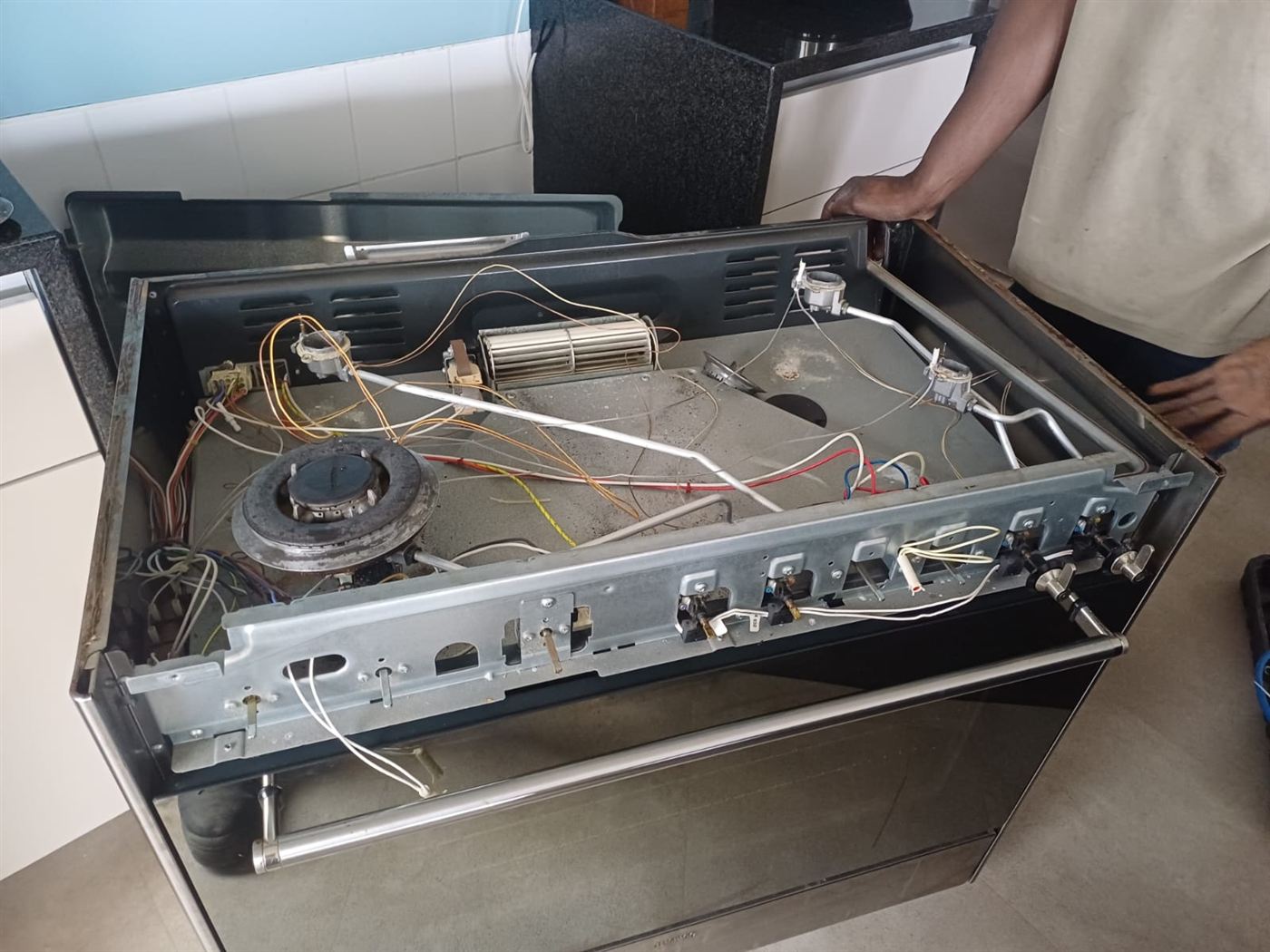
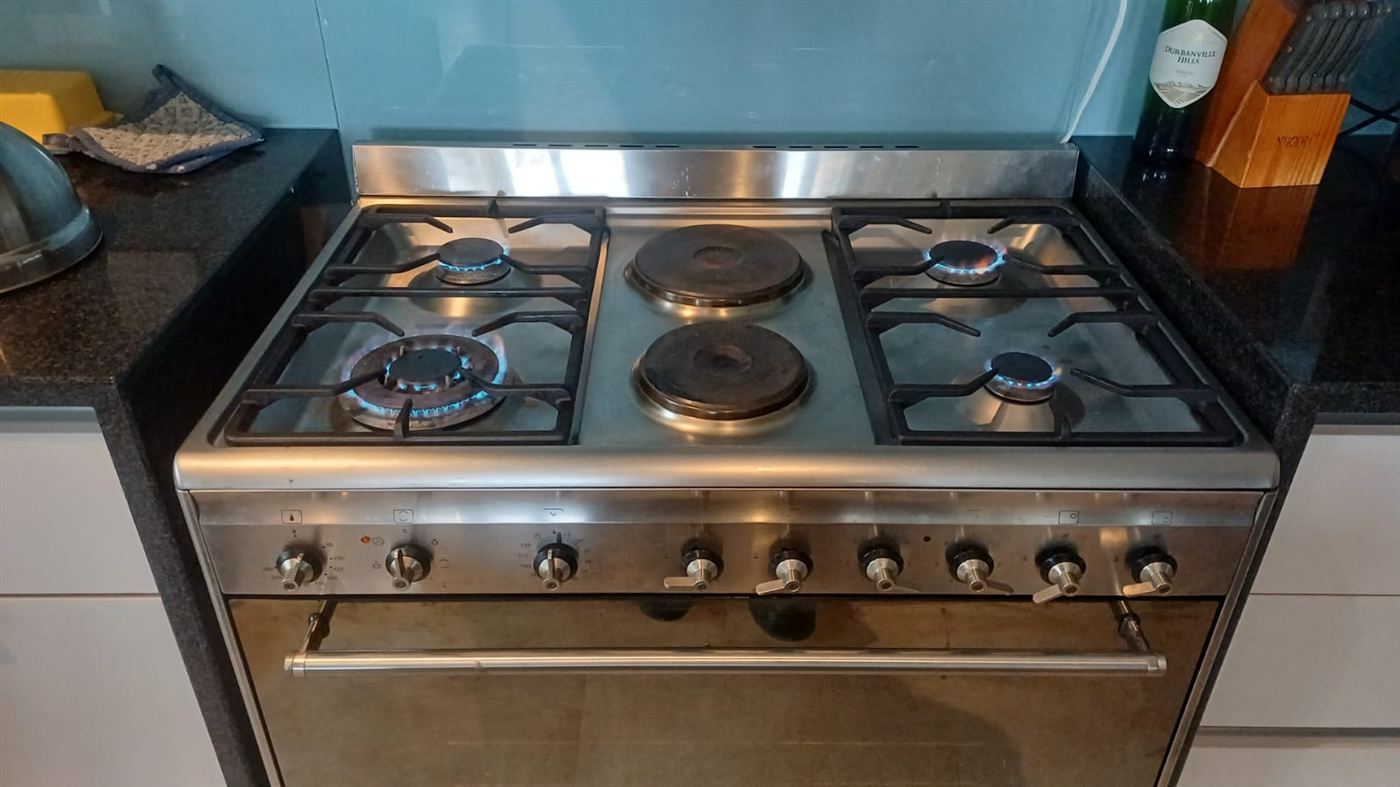
This Smeg cooker has four gas burners, two electric plates and an electric oven. The gas burners would light, but the flame died as soon as the customer let go of the knob. That's a classic flame-safety fault. Each gas burner has a thermocouple, a small metal probe that sits in the flame. When it's hot, it holds the gas valve open. When the flame goes out, it cools and shuts the gas off, so unburnt gas can't leak into the kitchen. A faulty thermocouple can't hold the valve open, so the gas cuts off even though the flame is lit. We lifted the hob, tested the flame-safety system, replaced the faulty thermocouple and tested every burner. They all stayed lit. Tip: if a burner only stays lit while you hold the knob in, try holding it for 10 to 15 seconds first so the thermocouple heats up, and check the burner cap is seated properly. If it still goes out, the thermocouple needs replacing. Never bypass it. It's there for your safety.
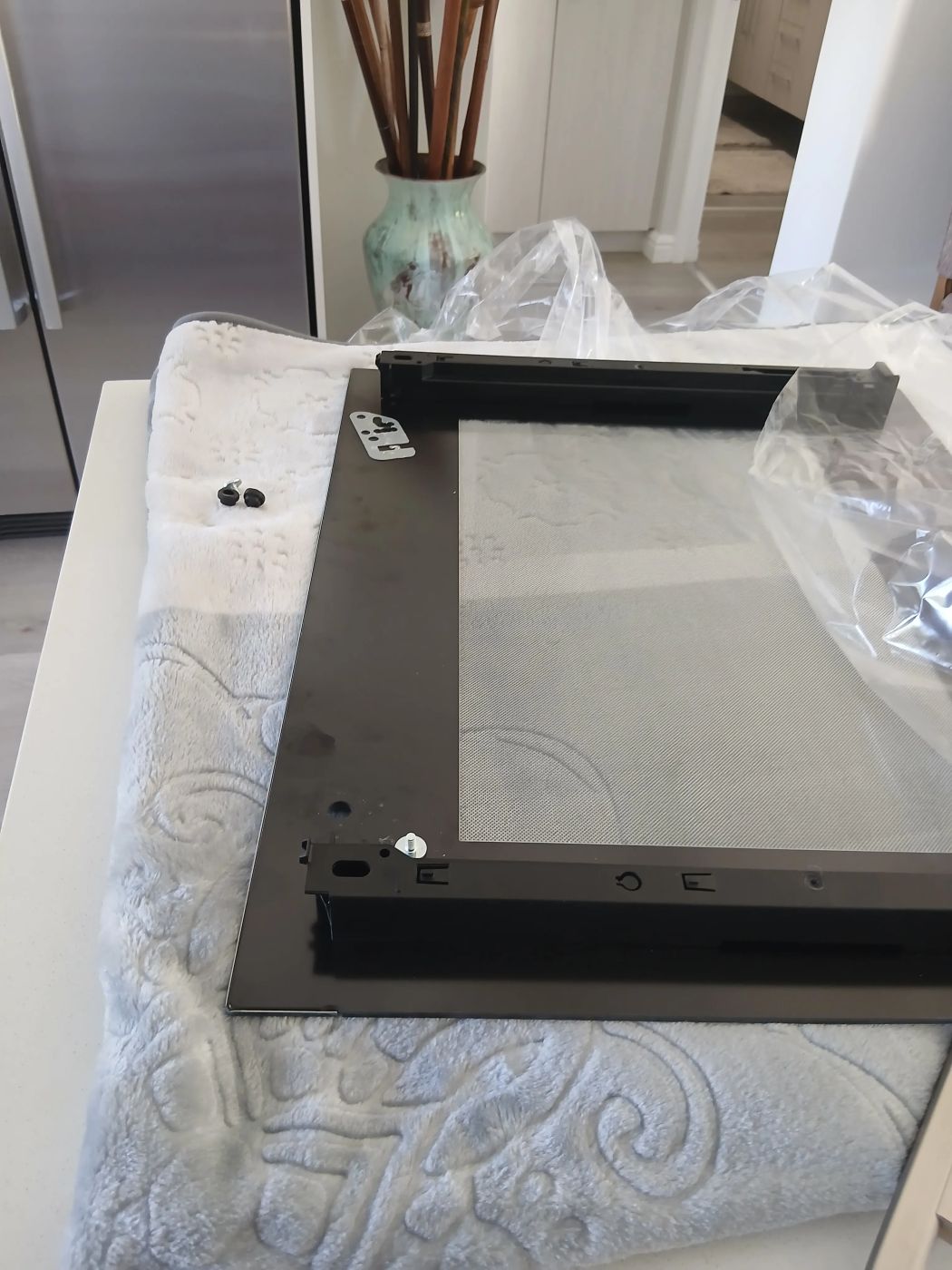
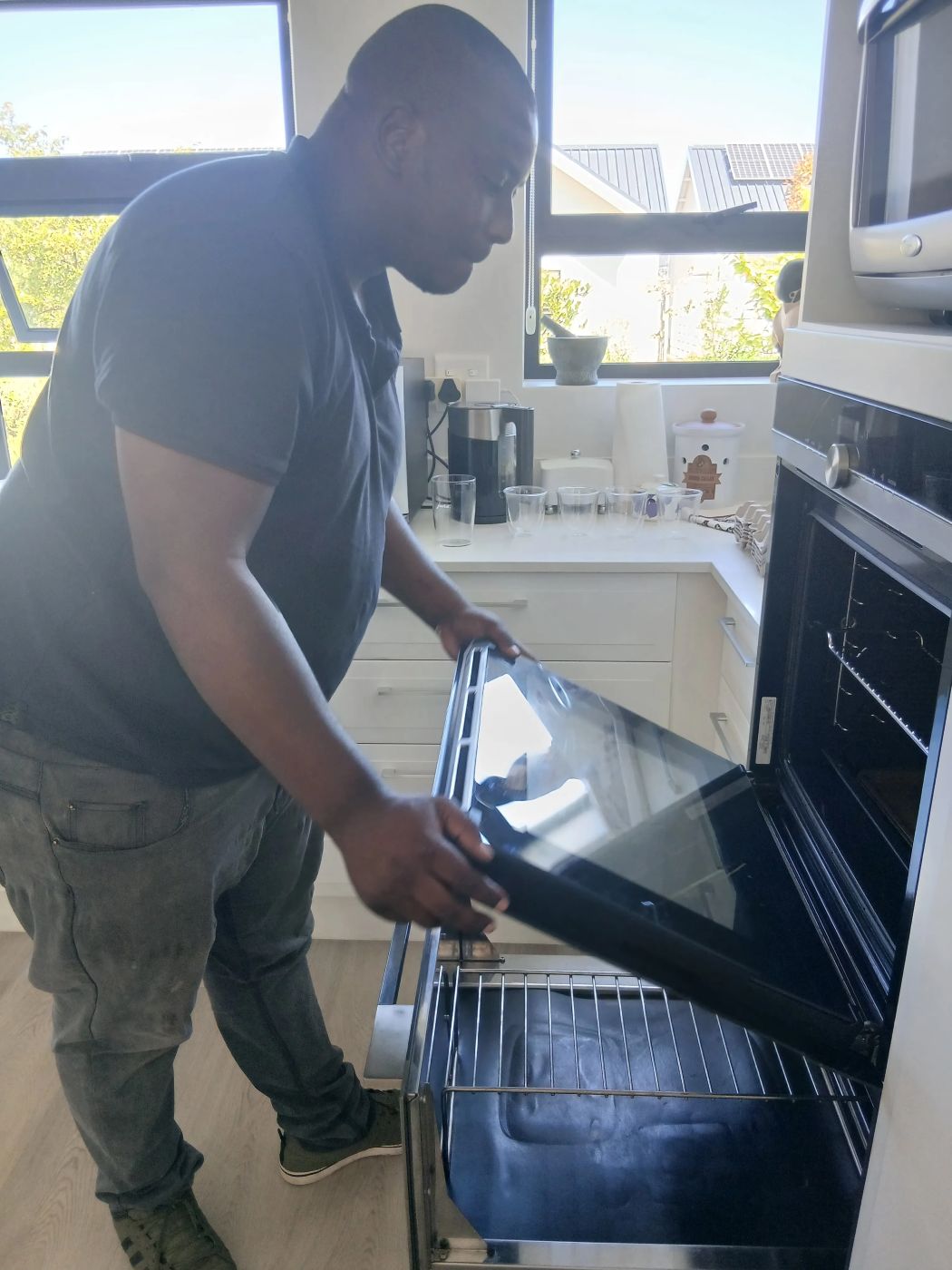
This Siemens built-in oven needed new heat-resistant glass in the door. Oven doors are built in layers: several panes of special tempered glass with air gaps between them, which keep the heat in the oven and keep the outside of the door safe to touch. Ordinary glass can't take oven temperatures, so the replacement has to be the correct heat-resistant panel for the model. We took the door off its hinges, stripped it down on a towel to protect the glass and the customer's counter, fitted the new panel with its frame and fixings, then rebuilt the door and hung it back on the oven. We checked it closed and sealed properly before we left. Tip: if a pane in your oven door is cracked or chipped, stop using the oven until it's replaced. Damaged tempered glass can shatter suddenly when it heats up.
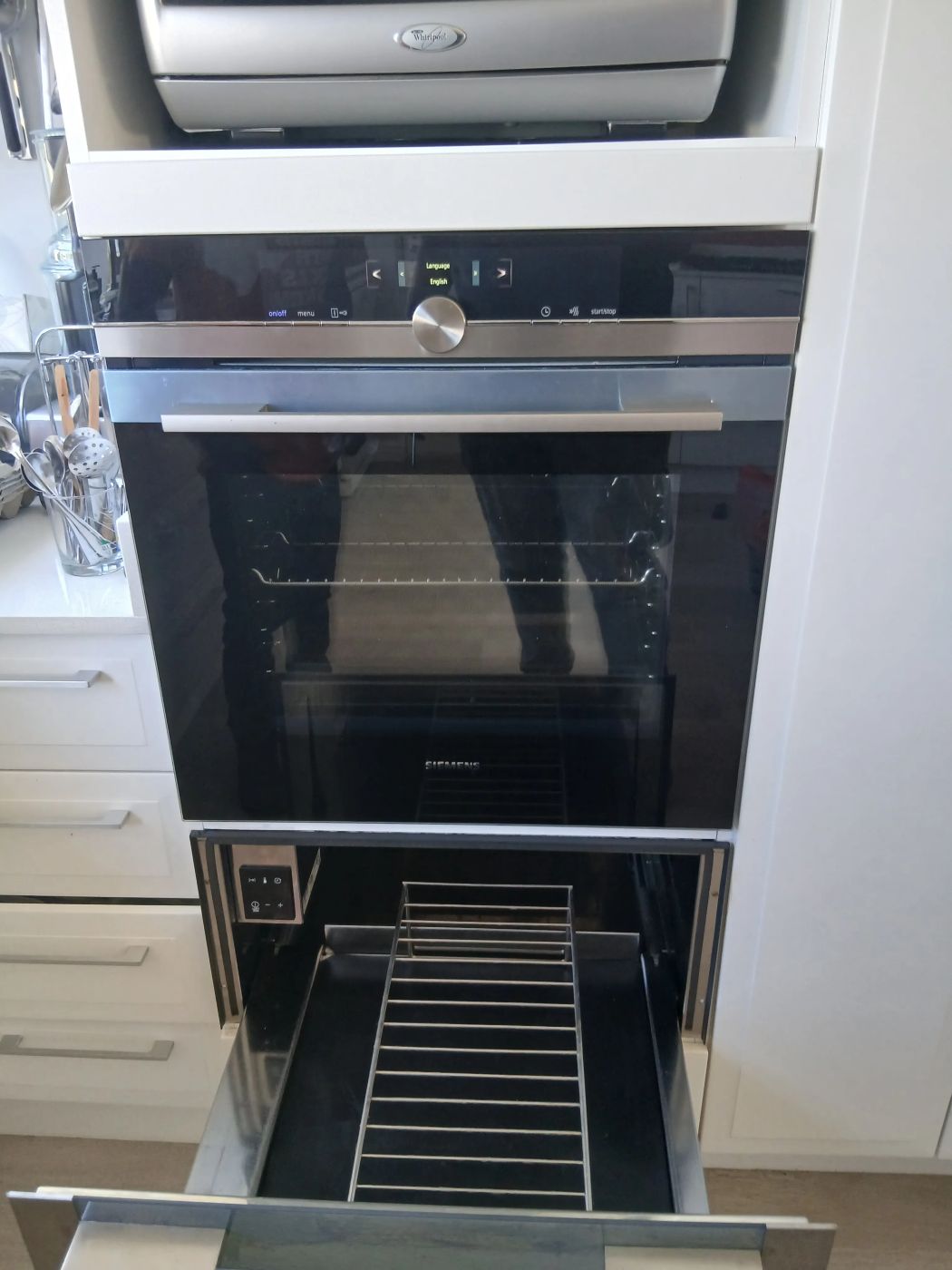
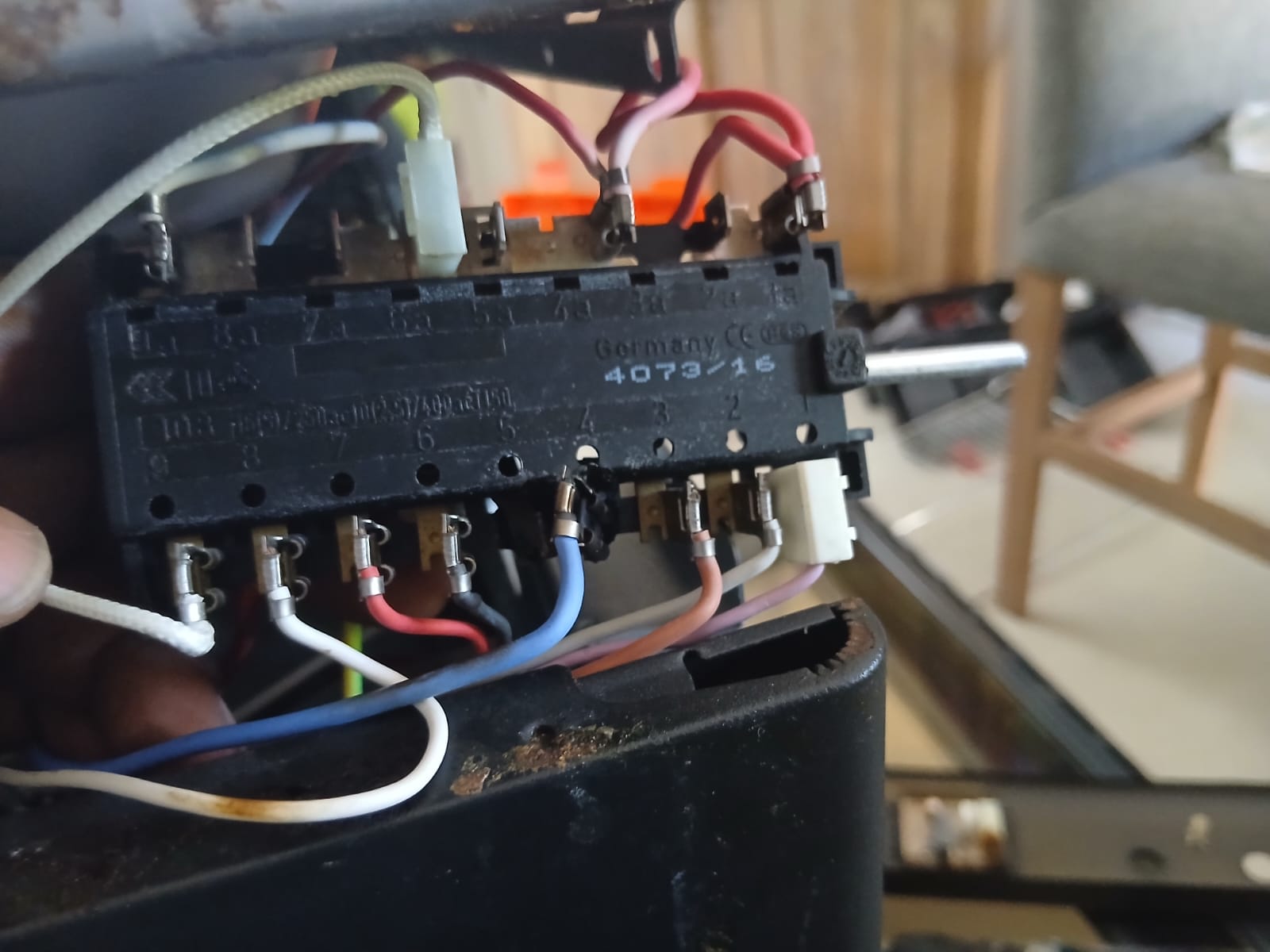
The customer phoned to say the oven was battling to reach temperature, and asked us to replace the thermostat. We recommended an assessment first, because several parts cause the same symptom. Our technician found the bottom (bake) element wasn't coming on, but the element and the thermostat both tested perfectly. The real fault was the oven's function selector switch: one of its terminals had burnt, so power never reached the bottom element. We replaced the selector switch and the oven heated up properly again. Diagnosing first saved the customer the cost of a thermostat they didn't need. See also: why an oven won't heat up.
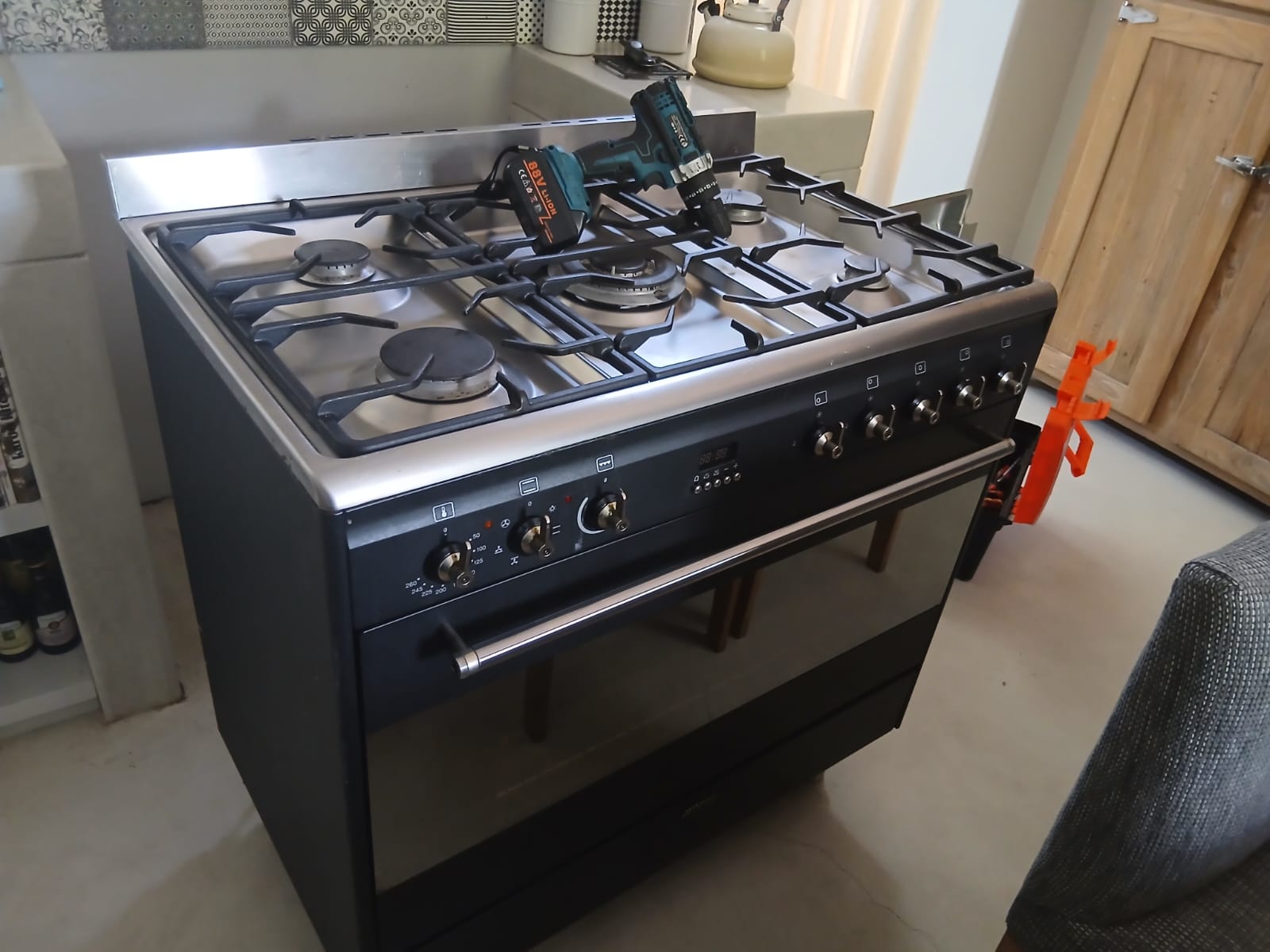
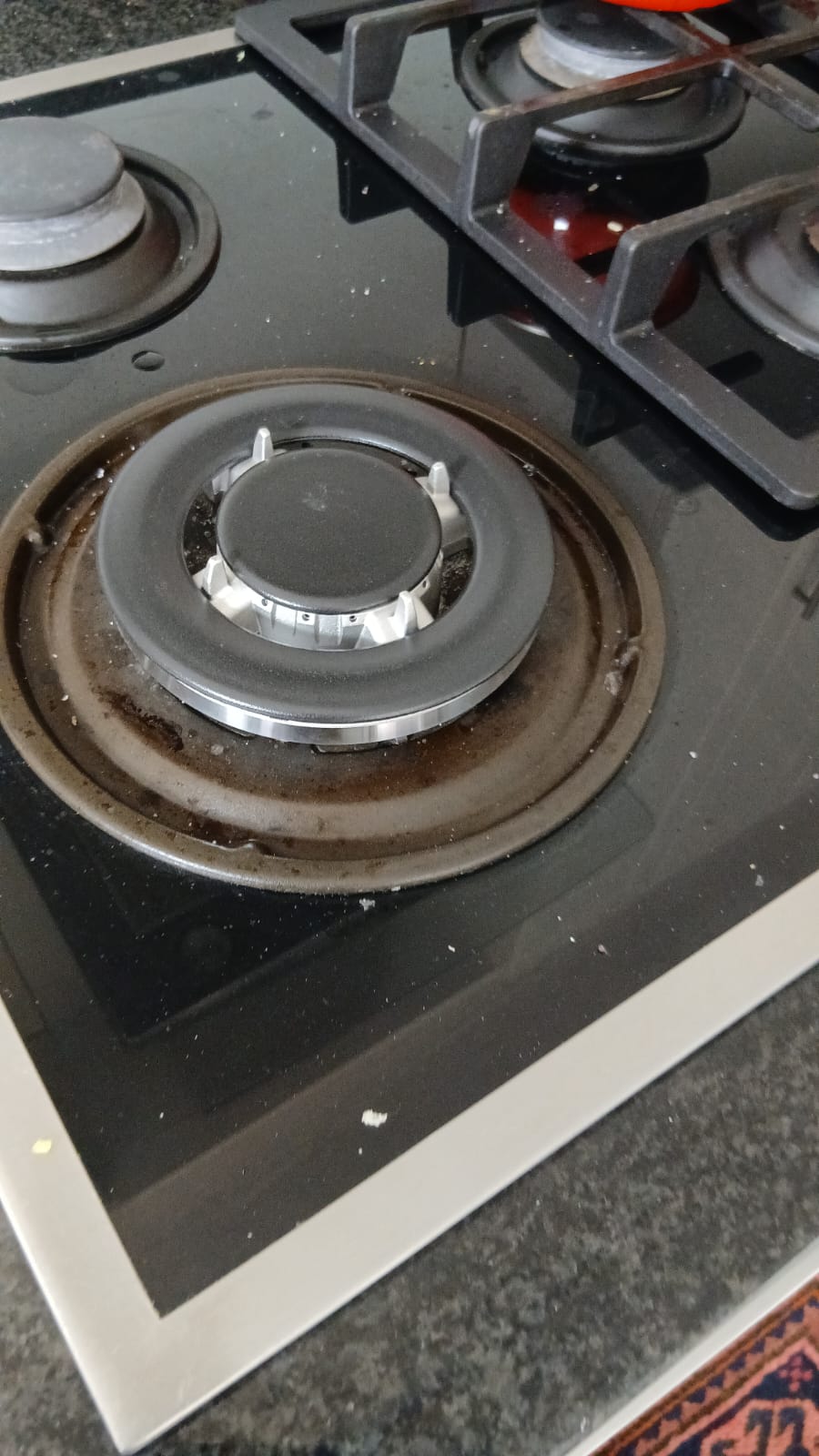
One of the gas burners (the "plate") was taking far too long to light. The igniter was sparking, but the flame wouldn't catch quickly or evenly. When we assessed it, we found the burner base had warped from years of heat. A warped burner doesn't seat properly, so the gas comes out unevenly around the ring instead of reaching the igniter cleanly. We replaced the burner, and the Swiss hob lit straight away and burned with an even flame, working as good as new. Slow or patchy ignition is often a burner problem, not just a weak spark.
The customer was getting a mild electric shock from the cooker, and the electric oven had stopped working completely. When we opened it up, we found the cause: rats had got inside and chewed through the wiring, leaving bare copper touching the metal frame. That's what made the cooker live to the touch and cut power to the oven. We replaced the damaged wiring, checked the earth and every element and switch, and the oven was back working the same day. If you've had rats or mice in the kitchen, have your stove and fridge checked: chewed wires are a shock and fire risk.
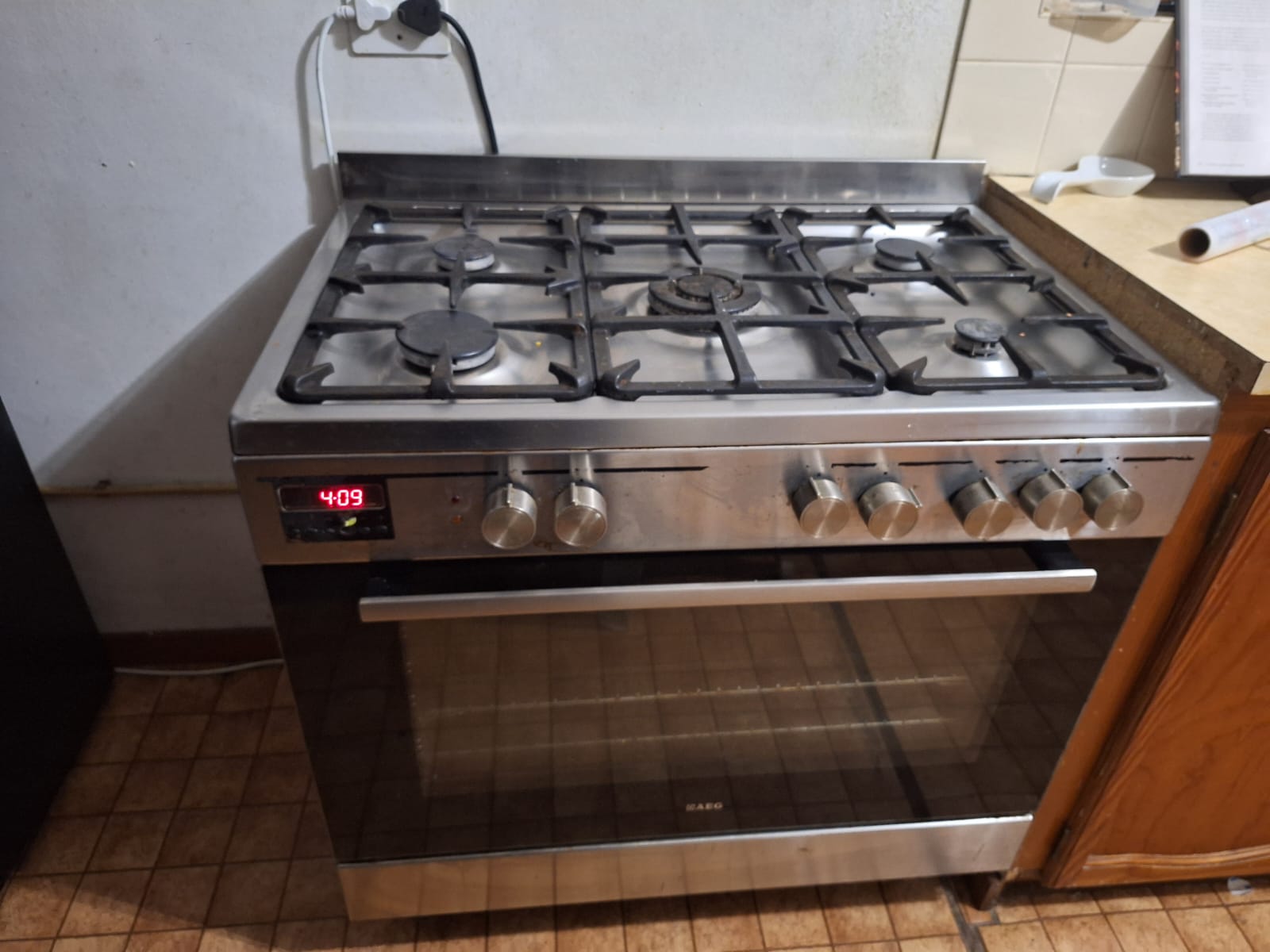
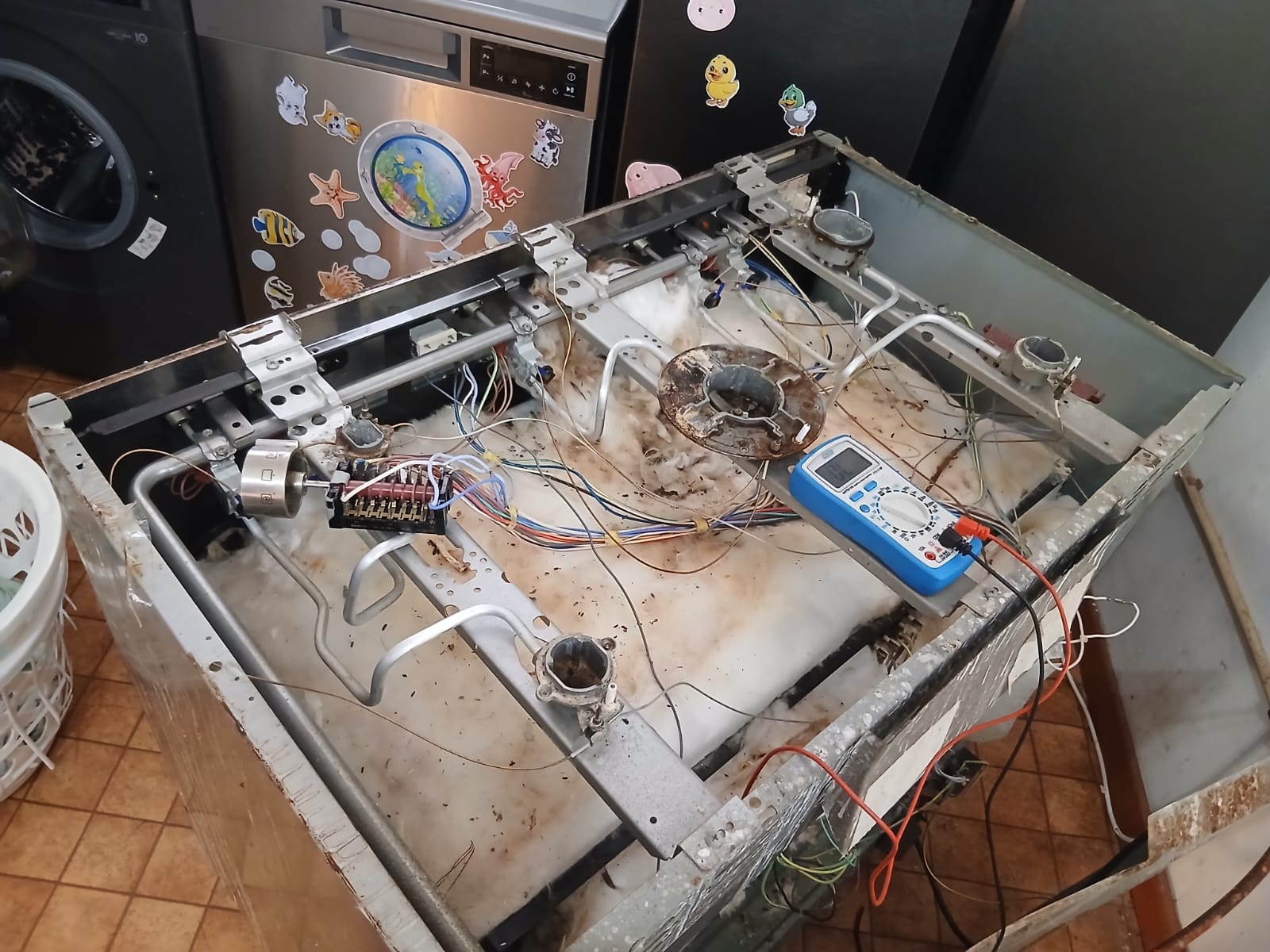
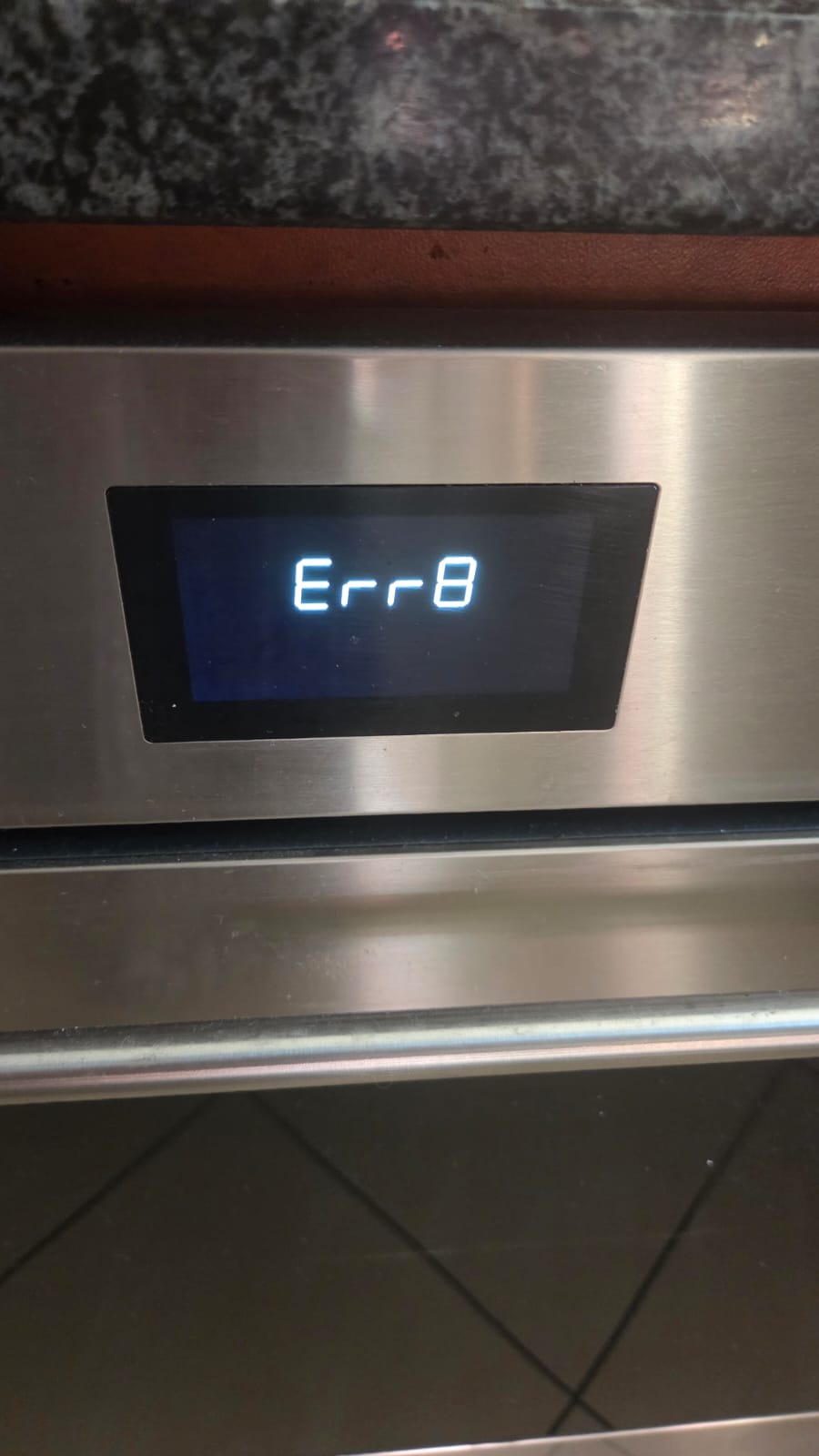
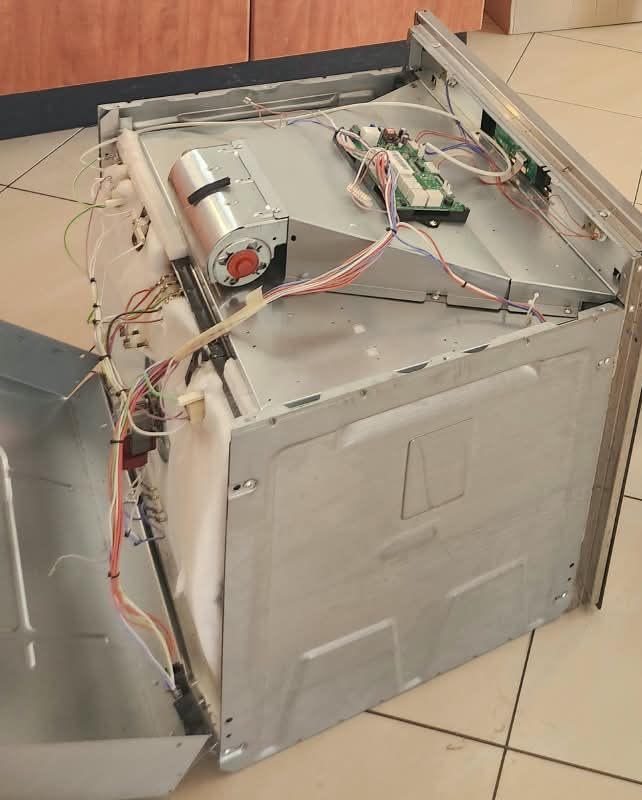
The oven had stopped working and the display was showing Err8. We pulled the oven out to get to the electronics. Testing showed the main control board (motherboard) had burnt out, which no amount of resetting would fix. We replaced the control board, tested every function, and the oven was back in use the same day.
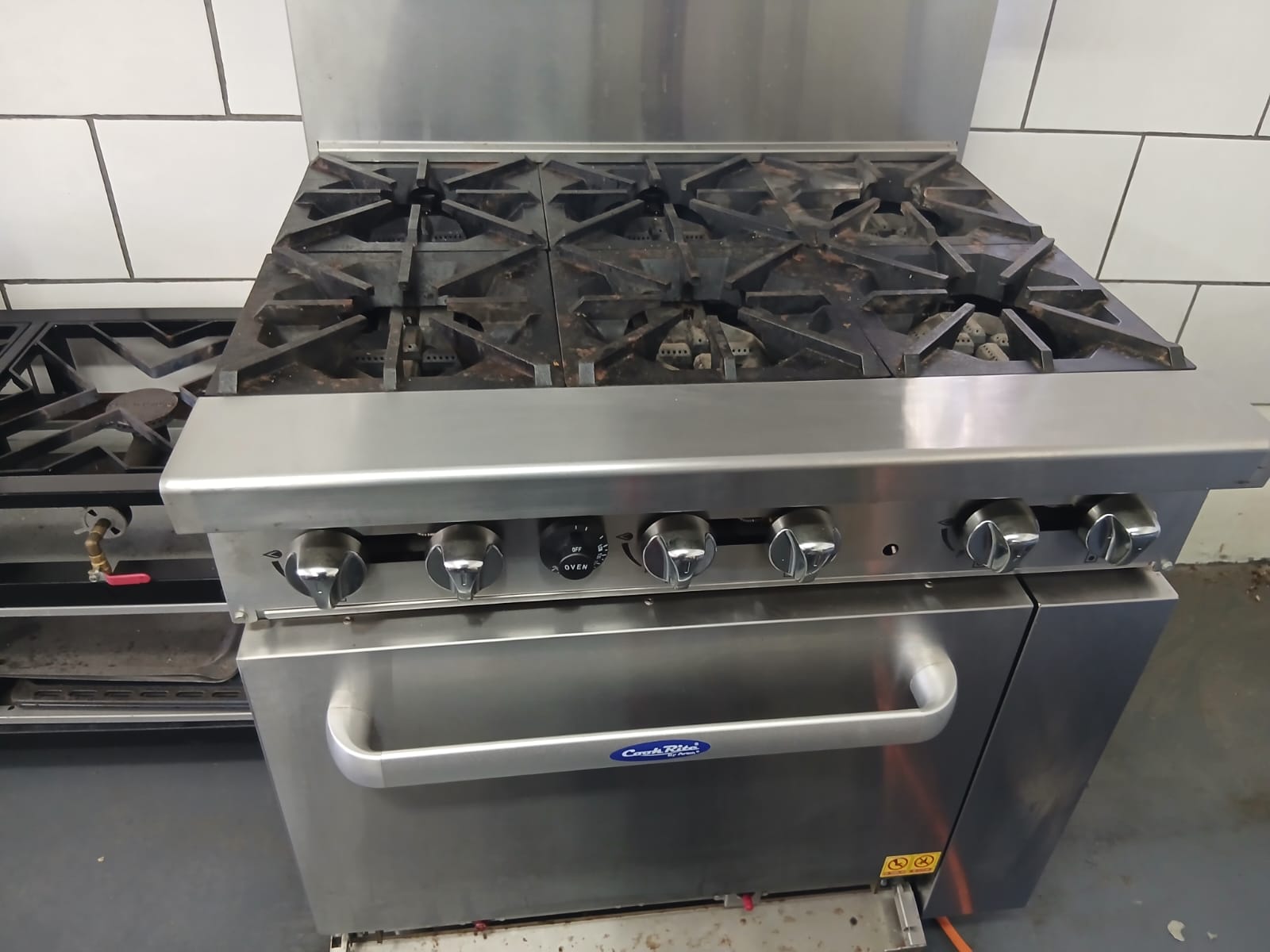
The kitchen's six-burner range wasn't working properly. The flames were weak and uneven. The cause was a build-up of grease and grime on the burner nozzles, restricting the gas and air flow the burners need to burn cleanly. It's one of the most common faults on busy commercial stoves, and regular cleaning of the jets and burners prevents it. We cleaned the nozzles and burners, and all six burners were back to a strong, even flame.
Tell us what's broken and where you are. We'll call you back to confirm a time, usually the same day.
 Absolute