Independent, on-site repairs for Samsung fridges, ovens, induction hobs, washing machines and digital inverter aircon units — without the waiting list that comes with manufacturer-authorised service.
Samsung runs its own authorised service network in South Africa, which is the right call while a unit is still under warranty. Once that warranty has expired, though, going through the manufacturer channel usually means a call centre queue, a multi-day wait for a van, and parts pricing set centrally. We work as an independent alternative for exactly that stage: same-day diagnostics, technicians who come straight to your door, and parts sourced to get older or discontinued Samsung models running again rather than pushing a replacement.
Quick answer: Yes, we repair the full Samsung home appliance range — fridges, ovens, induction hobs, washing machines and aircon units — anywhere in Gauteng, as an independent repair company (not an authorised Samsung service centre). Call-out is R350, and most faults are diagnosed and quoted on the same visit.
Quick answer: The most common Samsung fridge faults we see are compressor failure (fridge runs warm, compressor humming or silent), ice-maker jams or leaks, and error codes like OF, 21E/22E and rF pointing to a defrost or fan sensor fault. Most are fixed on-site the same day.
We repair French-door, side-by-side and top-mount Samsung fridges across Gauteng — compressor and cooling faults, ice-maker failures and leaks, door seal replacement, and the digital display error codes Samsung fridges are known for.
Common Samsung fridge error codes
OF / OF1 — defrost system fault, usually a frozen or faulty defrost sensor
21E / 22E — fridge or freezer fan motor issue, often shows as warm spots or excessive noise
rF / rF1 / rF2 — fridge compartment sensor fault
dh / dh1 — defrost heater fault
In Midrand specifically, Samsung fridge compressor and ice-maker faults are our most common call-out — see our dedicated multi-brand fridge repair Midrand page for the specific faults we see there and how we fix them.
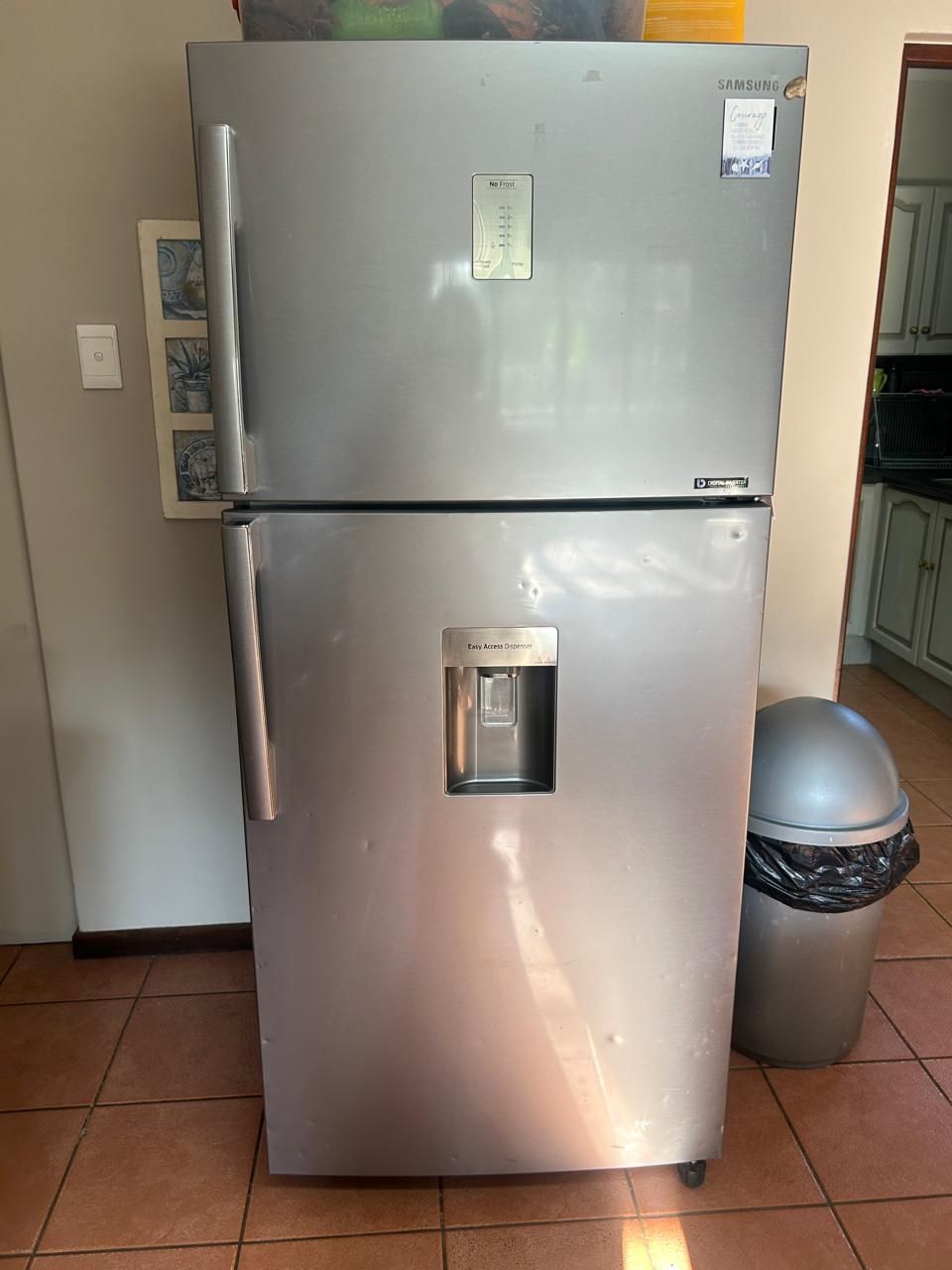
Recent job: Samsung No Frost fridge-freezer, Fourways
A Samsung top-mount with the Easy Access water dispenser — a common household model, and one where the dispenser itself (rather than the cooling system) is often the actual source of a reported "not cooling properly" call.
🔥 Samsung Oven, Stove & Induction Hob Repair
Quick answer: We repair Samsung electric ovens (heating element and thermostat faults), gas ovens and stoves (ignition and burner issues), and induction hobs (control board faults, coil failures, and "pot not detected" errors) — both freestanding and built-in units.
Samsung's electric ovens most often fail at the top or bottom heating element, or the thermostat/temperature sensor drifting so the oven runs hotter or cooler than the dial setting. On induction hobs, the usual complaint is a zone that won't heat, an E-code on the display, or the hob refusing to recognise a pan that's actually induction-compatible — this is almost always a control board or coil fault rather than the cookware.
What we repair on Samsung cooking appliances
Electric ovens — heating element replacement, thermostat and temperature sensor faults, door seal and hinge repair
Gas ovens & stoves — ignition failure, burner blockages, gas valve and safety solenoid faults
Induction hobs — control board (PCB) faults, induction coil failure, touch-control panel faults, "pan not detected" errors
⚠️ Gas oven and gas hob repairs involving the gas line or safety valve should always be diagnosed by a technician on-site — please don't attempt to relight or bypass a gas ignition fault yourself.
🌀 Samsung Washing Machine Repair
Quick answer: The SUD (or 5UD/SUdS) error on a Samsung washing machine means it has detected excessive suds and paused the cycle to drain them — usually caused by using the wrong detergent type or too much of it, or a partially blocked drain pump/filter. Switching to low-suds front-loader detergent and running a clean cycle solves most cases; a persistent SUD error usually means the drain pump or pressure sensor needs checking on-site.
The Samsung SUD / SUDS error, explained
This is one of the most common calls we get on Samsung front-loaders. The machine's pressure sensor detects an abnormal amount of foam in the drum during the wash or rinse cycle, pauses, and tries to dilute and drain it before continuing. It almost always comes down to one of these:
Using regular top-loader powder or dishwashing liquid instead of low-suds "HE" front-loader detergent
Overdosing detergent, even the correct type
A drain pump or filter partially blocked with lint, coins or debris, so suds can't clear fast enough
A faulty pressure/level sensor giving a false suds reading
If switching detergent and running an empty hot-wash cleaning cycle doesn't clear it, the drain pump and pressure sensor need to be checked and are usually fixed on the same call-out.
Other common Samsung washing machine faults
4E / 4E1 — water inlet fault (check tap and inlet valve)
LE / LE1 — leak sensor tripped, or drum bearing failure on older units
dC / dC1 — door/lid lock fault
Drum bearing wear (grinding or knocking sound on spin), drainage blockages, and door seal (boot gasket) tears
❄️ Samsung Aircon Installation & Maintenance
Quick answer: Yes — we install new Samsung wall-mounted split and digital inverter aircon units (piping, bracket mounting, electrical connection, and gas charge to spec), and we service, re-gas and repair units already installed. A service every 6–12 months keeps a Samsung inverter unit running efficiently and covers filter clean, coil clean, gas pressure check and drain line check.
Installation
New Samsung digital inverter split units installed to manufacturer spec — correct pipe sizing and insulation, secure bracket mounting on wall or slab, electrical connection through an isolator, and a full gas charge and pressure test before handover, with a written report for warranty registration.
Maintenance & servicing
Filter and coil cleaning (indoor and outdoor unit)
Gas pressure check and re-gas where needed
Drain line clearing (prevents the common "water dripping from indoor unit" complaint)
PCB and remote sensor fault diagnosis
Compressor and fan motor fault repair
We also provide insurance-compliant call-out and surge damage reports for Samsung aircon units affected by power surges or lightning — common after Gauteng's summer storm season.
🔄 Samsung Tumble Dryer Repair
Quick answer: The most common fault on Samsung Sensor Dry tumble dryers is a blocked lint filter or condenser/vent restricting airflow, so the dryer runs a full cycle but clothes come out barely drier. Worn heating elements and drum belts are the next most common calls.
Blocked lint filter or vent — longer cycles, clothes still damp
Heating element failure — dryer runs but produces no heat
Drum belt or roller wear — drum won't turn, or a slapping noise on spin
Moisture sensor fault — dryer stops too early or overdries
🍽️ Samsung Dishwasher Repair
Quick answer: An LE error (leak detected) and a machine that won't drain properly are the two most common Samsung dishwasher faults we see — and in most cases the actual cause is a blocked drain pump or filter, not the leak sensor itself.
Not draining — water left in the base after a cycle
LE leak-sensor error — often triggered by a drain blockage, not a real leak
Spray arm blocked — dishes come out with food residue
Door latch or hinge fault — door won't lock or seal
☕ Samsung Coffee Machine Repair
Quick answer: We service and repair built-in and countertop coffee machines across all major brands, not only Samsung — the most common faults are limescale build-up (slow flow, a noisy pump, or error lights) and a brew unit that needs cleaning or replacing.
Descaling and limescale-related faults — slow or no water flow
Brew unit jam or wear — machine won't complete a brew cycle
Leaking — worn seals or gaskets
Grinder faults on bean-to-cup models
Won't power on or control panel unresponsive
Samsung Repair FAQs
No — we're an independent repair company, not part of Samsung's official service network. If your appliance is still under warranty, using Samsung's authorised service keeps that warranty intact, and we'll always tell you if that's the better option.
Mainly speed and flexibility once a unit is out of warranty — same-day on-site diagnostics, a technician who comes straight to your door, and no call-centre queue to book in.
SUD (shown as 5UD, SUdS or SUdS on some models) means the machine has detected excessive suds and is pausing the wash to drain them. It's usually caused by using regular dishwashing or laundry powder instead of low-suds HE detergent, overdosing detergent, or a drain pump or filter that's partially blocked so suds can't clear fast enough. Switching to the correct front-loader detergent and running a clean cycle solves it in most cases; if it keeps recurring we check the drain pump and pressure sensor on-site.
These codes point to the fridge or freezer sensor circuit — OF/OF1 usually means a defrost fault, 21E/22E a fan motor issue, and rF/rF1 a fridge compartment sensor fault. All three can look identical from the outside (fridge running warm or freezer icing up) but need different parts, so we diagnose on-site with the actual error code rather than guessing.
Yes — induction hob control boards and coil faults, electric oven heating elements and thermostats, and gas oven ignition and burner issues on Samsung ranges and built-in units.
Both. We install new Samsung wall-mounted split and digital inverter units (including piping, bracket mounting, and electrical connection), and we service, re-gas and repair units already installed.
We recommend a service every 6 to 12 months — filter clean, coil clean, gas pressure check, and drain line check. Units used daily in summer or in dusty areas do better on the 6-month side of that.
Fridges and freezers, washing machines and tumble dryers, ovens, stoves and induction hobs, and Samsung digital inverter aircon units — installation, maintenance and repair — across Gauteng.
Nine times out of ten this is restricted airflow — a blocked lint filter, condenser, or vent hose — rather than a dead heating element. We check and clean the airflow path first, since it's the cheaper and far more common fix.
Not always. LE means the leak sensor in the base has been triggered, which is frequently caused by a drain blockage or a small amount of trapped water rather than an active leak. We check the drain pump and filter before assuming a seal has failed.
Yes — we service and repair espresso, bean-to-cup and pod coffee machines across most major brands, not only the brand this page is about. The R350 call-out fee and diagnostic process are the same either way.
 Absolute Repairs & HVAC